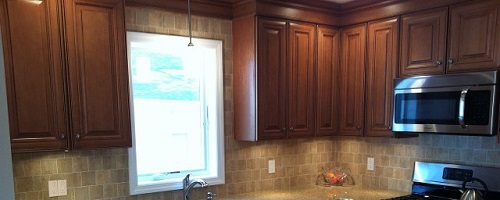
6 Home Renovation Mistakes That Could Cost You
Considering home improvements this year? Here are six missteps to avoid.
Many homeowners undertake renovations in the fall before winter sets in. Market research company IBISWorld estimates that home remodeling is a $52 billion market that grew 3.8 percent between 2009 and 2014. Still, not all home improvements are created equal. Many homeowners assume they’ll recoup their investment in renovations when they sell the property, but that’s not always the case.
Here’s a look at home renovation blunders you may live to regret.
1. Hiring the first contractor you can find. Before undertaking renovations, get quotes from several contractors – and dig beyond the surface to make sure you’re choosing the one you can trust. “When searching for contractors, homeowners often turn to contractor referral or user review sites,” says Monica Higgins, founder of California construction management firm Renovation Planners and RemodelEinstein.com, an online remodeling resource. “However, they need to keep in mind that these sites are in the business of charging contractors for homeowner referrals. They are not in the business of carefully assessing contractors’ competence or screening the contractors they refer beyond licensing, insurance and bonding.” She recommends that homeowners conduct criminal, financial and legal background checks and check customer and trade references – steps that many people just don’t take. Organizations like the League of California Homeowners can assist homeowners with a background check for a fee. Also, contact the Better Business Bureau or a local consumer affairs agency to check for complaints. If the professional is a member of a trade organization like the National Association of the Remodeling Industry, that can also be a positive sign.
2. Failing to get permits. Filing the necessary paperwork for building permits may be a nuisance for your contractor, but it’s often necessary. “A remodel project of any consequence requires a building permit,” says Rick Goldstein, an architect and co-owner of MOSAIC, a design and building company in Atlanta. “Typically, city inspectors will inspect the work of each trade at both rough-in and finish stages of the project, [checking] that the work was installed safely.” Goldstein cautions against contractors who say permits and inspections aren’t necessary. “This could result in steep fines and reopening of walls and ceilings,” he adds.
3. Setting an unrealistic budget. Run out of money mid-renovation, and you may have to live with a half-finished kitchen for the foreseeable future. Set a reasonable budget, and build in extra money for the inevitable surprises. “Remodeling always costs more than expected,” Goldstein says. “Costs will vary significantly based on the size, complexity and quality of a particular project.” He suggests keeping an extra 10 percent in reserve in case issues pop up along the way and expecting to spend at least $200 to $300 per square foot for a high-end kitchen or master bathroom. “Understand that there will be trade-offs, and you may even consider phasing the project to meet your budget needs,” he adds.
4. Over-improving for the neighborhood. If most homes in your neighborhood are under 2,500 square feet with basic fixtures, putting in a 1,000 square-foot addition won’t necessarily pay off when it’s time to sell. “A home’s value is limited to the median home price value of the neighborhood,” says Mark Attarha, broker and owner of East Bay Sotheby’s International Realty in Oakland, California. “Look at the neighborhood’s median home price levels. The statistic will provide you a good idea of what similar homes are selling for and help you determine how much money should be invested to help ensure positive return on investment.”
5. Getting too personal. If you plan to stay in the property for a long time, you’ll have time to enjoy unusual choices like purple wall-to-wall carpeting (most buyers prefer hardwood nowadays) or a large, climate-controlled wine cellar with built-in storage. Just don’t expect prospective buyers to love those same things. “Whether it’s a specific paint color or shrine to your favorite sports team, it’s best to keep improvements neutral to help appeal to a wider audience,” Attarha says. “A neutral space lets the buyer envision their preferred living space … [and] they will not have to waste time and money repairing the home to their liking.”
6. Expecting a return on hidden renovations. Buyers love upgrades they can see: granite countertops, high-end appliances, crown molding. “The cosmetic upgrades are the eye candy that people go for,” Higgins says. Redoing your home’s plumbing or electrical wiring or improving insulation aren’t visible upgrades that buyers expect to pay for. That said, if your home does have serious structural or other problems, address them before putting your house on the market if you can. “If you have mold, you’ve got to take care of that issue,” Higgins says. Many buyers would rather pay for a home that’s move-in ready than subtract the cost of renovations and live through the process themselves.
Reference: https://loans.usnews.com/home-renovation-mistakes-that-could-cost-you
6 Best Ways to Efficiently Spend Your Tax Refund on Your Home
1. Replace the Front Door
Making an addition of a modern, new front door can enhance your home’s charm as well as expand upon its insulation while fortifying an entryway. Buying and installing a new steel entry door is a common upgrade we do at JKL and has a return-on-investment (ROI) of 96.6% according to Realtor Magazine.
2. Add a Deck
Adding a deck or resurfacing a preexisting one with new composite material now has the best ROI since 2007. A deck we typically recommend is at least 15-by-25-foot wood or composite deck and will return about 87.4% of its cost after resale. If you previously have a deck, you could add some extras, such as an outdoor fireplace, roof with matching siding, fascia, columns and gutters or ambient lighting.
3. Add a Bed and Bath to Your Attic
An extra bedroom can substantially increase your home’s value. So while it’s not cheap—turning an attic into a 15-by-15-foot bedroom with a 5-by-7-foot bathroom with shower will cost, on average, about $49,400—you can expect a decent ROI of 84%. If you choose to forgo the bathroom, the job will be cheaper but the ROI may not be as high, since there is value in not having to go downstairs for a bathroom (The report doesn’t offer a cost vs. value analysis without it).
4. Replace the Garage Door
Replacing that rickety garage door with a smooth-moving, modernized one is an inexpensive addition with an average cost of about $1,530 and an estimated ROI of 83.7%. While the garage might not rank high on your list of things to fix, remember that more than three out of every four homebuyers purchase a home with a garage.
5. Tweak Your Kitchen
Kitchen remodeling is predicted to be the most common renovation that homemakers will decide to make in 2014. However, you don’t need to do a full-blown kitchen redo for a solid investment. Leave the old cabinets but replace the doors and drawers; pop in some new energy-efficient appliances; and install a new, modestly priced sink. Replace old countertops, touch up the paint and fix cracked flooring. The cost for this type of mid-range remodeling is $18,856, and is estimated to have an ROI of 82.7%.
6. Replace Windows
Not only can replacing windows earn a solid ROI, you can also cut down on your heating and cooling bills and earn energy tax credits with energy-efficient models. The cost to replace 10 standard windows with insulated wood replacements is about $10,900, with a 79.3% ROI, according to the Cost Vs. Value report. If you’re going with vinyl windows, the job will cost about $9,980 and has an estimated ROI of 78.7%.
 JKL Development Corp